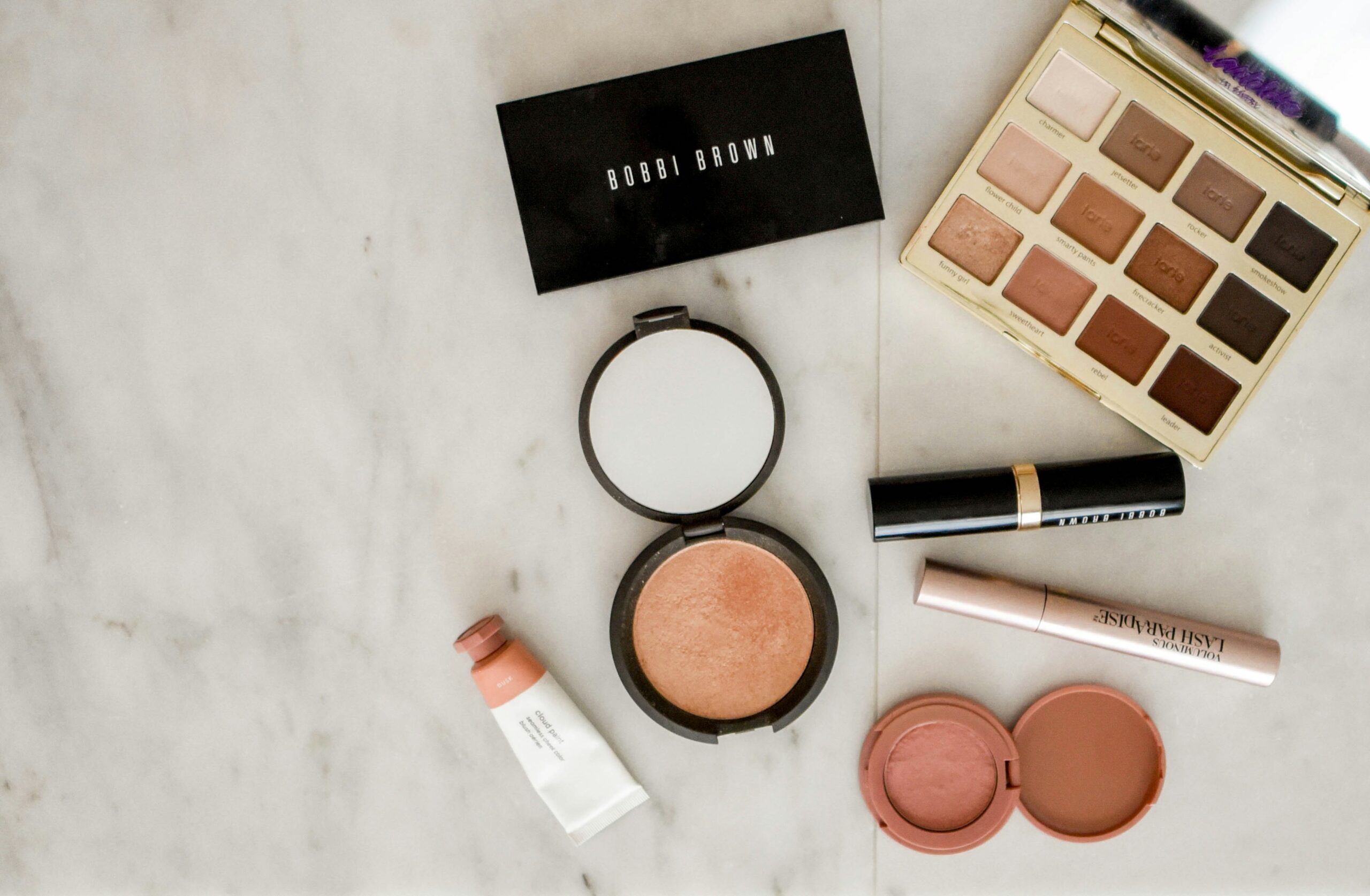
Beauty is the most-discussed industry on TikTok. But in a category this saturated, reach is not the same as results — and the gap is widening.
The beauty industry’s relationship with influencer marketing is the most developed of any consumer category — and also the most contested. Beauty was among the first verticals to recognise the commercial power of creator endorsement, and it remains the most active category on the platforms where that endorsement is most visible. According to the Influencer Marketing Benchmarks Report, beauty is the most-discussed industry on TikTok, with 3.63 million posts and the platform’s highest absolute volume of creator content in any single vertical. The global beauty industry is projected to surpass $720 billion in total revenue in 2026, with the influencer channel playing a measurably significant role in how consumer decisions are shaped within it.
The challenge is that saturation has changed what effective influencer marketing looks like in this category. A strategy built around product gifting to large accounts and hoping for a viral moment was already showing diminishing returns two years ago. In 2026, with consumers demonstrably more sophisticated about sponsored content, platforms more algorithm-dependent on sustained engagement rather than one-off spikes, and attribution tools good enough to distinguish genuine commercial performance from impressive-looking vanity metrics, the gap between brands running effective creator programmes and those running expensive experiments has never been wider.
The Structural Shift: From Celebrity Reach to Expert Authority
The most consequential change in beauty influencer marketing over the past three years is not a platform shift or a format change — it is a fundamental rethinking of which type of creator drives commercial results. The celebrity mega-deal that defined early beauty influencer marketing — a seven-figure contract with a major name whose face appears on product packaging alongside a social launch — has been structurally demoted from a primary acquisition strategy to a brand awareness play, and even that function is under pressure from more efficient alternatives.
What has replaced it is what Ogilvy describes as the rise of the “authority creator”: professionals whose followers look to them for education and vetted guidance, not simply aesthetic inspiration. In skincare specifically — the highest-growth sub-category within the global beauty market — the data on this shift is striking. Research cited by Brenton Way shows that 81% of consumers report definite trust in their dermatologist, compared to only 2% for social media influencers. When dermatologist-led content and standard influencer content conflict, 97% of consumers trust the credentialled professional. Skincare brands that have built creator programmes around dermatologists, aestheticians, cosmetic chemists, and board-certified skin health practitioners are achieving conversion rates and audience retention that purely aesthetic influencer programmes cannot match.
This shift toward authority does not mean the end of aspirational or lifestyle beauty content — it means a more deliberate tiering of creator functions within a single programme. The most effective beauty influencer strategies in 2026 combine expert creators for credibility and trust, micro-creators for engagement and community volume, and brand ambassadors for ongoing narrative consistency — each tier serving a distinct purpose within the consumer journey rather than competing for the same campaign objective.
Why Creator Tier Strategy Is the Foundation of Beauty Campaign Performance
The engagement rate data in beauty influencer marketing is now sufficiently granular to make tier strategy a precision exercise rather than a directional preference. According to WeArisma’s 2026 US beauty influencer benchmarks, nano-influencers in the beauty category average 6.64% engagement, compared to 1.88% for mega-influencers — a differential of more than three to one. The same pattern holds across platforms, with Brenton Way’s analysis showing micro-influencers averaging 3.86% engagement on Instagram versus 1.21% for mega-influencers, and the gap widening further on TikTok where micro-influencers average 7.5% against 5.67% for mega accounts.
The commercial translation of these engagement differentials is equally clear. Data from IQFluence shows micro-influencers delivering 3.2 times higher engagement than mega-influencers at 60% lower cost per post, with a 2.4 times higher conversion rate. For beauty brands optimising for customer acquisition rather than brand awareness, the ROI mathematics of micro and nano creator programmes is now unambiguous — and 62% of fashion and beauty brands report plans to increase influencer marketing investment specifically in these tiers over the next twelve months.
The practical implication is not to abandon macro or mega creators entirely, but to assign them the campaign function they actually excel at. Macro and mega influencers serve reach and launch-amplification objectives better than any other creator tier — 84% of major product launches still use macro or mega influencers for initial distribution. The mistake is using mega reach as a conversion mechanism, when the data consistently shows that conversion is where smaller, higher-trust creators outperform by a significant margin.
Platform Strategy: Where Beauty Conversions Actually Happen in 2026
Platform selection in beauty influencer marketing has never been more consequential — or more complex. Three platforms dominate the space, each serving meaningfully different functions in the consumer journey, and a programme built around only one of them is structurally underperforming regardless of how well it executes within that single channel.
TikTok: The Discovery and Commerce Engine
TikTok’s position in beauty influencer marketing has consolidated into something more than a top-of-funnel awareness channel — it is now a complete commerce infrastructure. TikTok Shop surpassed $2 billion in US beauty commerce in 2025, and the platform’s social commerce integration means that the journey from creator discovery to completed purchase can now happen entirely within a single session, without the consumer ever leaving the app. The #TikTokMadeMeBuyIt hashtag has accumulated over 77.8 billion views, and influencer-driven spend on TikTok grew 51% during Cyber Week 2025 while commission costs remained flat — a combination that represents one of the clearest demonstrations of improving creator ROI efficiency in any marketing channel.
The content formats driving the strongest TikTok performance in beauty are consistent and well-evidenced: Get Ready With Me videos, skincare transformation routines, ingredient education content, and honest product reviews in a conversational format. These formats succeed because they feel native to how TikTok users consume content generally — not like advertisements placed within a feed, but like content they chose to watch. Brands that supply creators with detailed scripts, rigid product messaging, or content formats that visibly depart from the creator’s normal register consistently underperform against brands that brief the outcome and trust the creator to determine the execution.
Instagram: The Ecosystem Platform
Instagram retains a structural role in beauty influencer marketing that TikTok’s growth has not displaced — it is the platform with the deepest creator ecosystem, the most mature commerce features, and the broadest demographic reach, spanning Gen X through Gen Z in a way that no other single platform currently matches. US marketers are allocating $2.56 billion to Instagram influencer marketing in 2026 — more than twice the equivalent spend on Facebook — and 89% of fashion and beauty marketers identify it as their preferred platform for creator collaborations. Reels now reach 36% more people than carousel posts, reinforcing the short-form video trajectory that TikTok accelerated, while carousels retain a 12% engagement advantage for brands whose content benefits from multiple-image formats such as skincare routine breakdowns or product ingredient comparisons.
YouTube: The Trust and Retention Channel
YouTube occupies a distinct and durable position in the beauty creator ecosystem specifically because of content longevity. A well-produced skincare tutorial or foundation review on YouTube continues generating views — and, via affiliate links, revenue — for months or years after publication. This shelf-life characteristic fundamentally changes the ROI calculation: the cost of a YouTube creator partnership is amortised across a much longer attribution window than a TikTok or Instagram post, and for high-consideration beauty purchases — serums, professional skincare devices, premium fragrance — the longer-form, more detailed content YouTube enables is precisely the format that supports the considered decision-making these price points require.
The Funnel Collapse: Why Discovery and Purchase Now Happen Simultaneously
One of the most important structural changes in beauty commerce over the past two years is what marketers call funnel collapse — the compression of the traditional awareness-consideration-purchase journey into a single touchpoint. Social commerce integrations on TikTok and Instagram have made it possible for a consumer to go from first encountering a product in a creator’s content to completing a purchase without leaving the platform, eliminating the multi-day consideration period that used to characterise beauty purchases above a certain price threshold.
This compression has meaningful implications for how beauty brands structure their creator campaigns. Content that previously served purely awareness objectives — a tutorial featuring a new product, a skincare transformation showing before-and-after results — now needs to be optimised for conversion as well, because the consumer has the ability to purchase the featured product in the same session. Every piece of creator content should include a clear, frictionless path to purchase: a TikTok Shop link, an Instagram product tag, or an affiliate link in the creator’s bio, depending on the platform.
User-generated content has become a parallel commerce driver that interacts directly with this compressed funnel. Research shows that 79% of consumers say UGC impacts their buying decisions more than influencer posts — a finding that underscores the value of creator programmes structured to generate authentic content from genuine product users rather than simply producing polished sponsored placements. Brands that seed products to a wide network of smaller creators and encourage organic reviews, rather than scripting every piece of output, consistently generate more UGC and better conversion performance than those that treat creator content primarily as a production exercise.
Compensation Structures That Actually Align Incentives
The compensation models underlying beauty creator partnerships have shifted materially in 2026, driven by a broad industry recognition that flat-fee arrangements — paying for content delivery regardless of commercial outcome — systematically misalign the interests of brands and creators. The move toward hybrid compensation structures is now a defining characteristic of the most effective beauty influencer programmes.
The hybrid model that is establishing itself as the industry standard combines a base creative fee — compensating the creator for their time, audience access, and content production — with a performance component tied to measurable commercial outcomes. This typically takes the form of an affiliate commission on tracked sales, a bonus triggered by conversion thresholds, or a tiered payment structure that increases as the creator’s content moves through performance benchmarks. According to Impact.com’s 2026 influencer marketing trends analysis, hybrid compensation with base fees plus ten to fifteen percent commissions and tiered bonuses is becoming the default structure for brands serious about measurable ROI — and 73% of brands are actively moving toward commission and affiliate models that tie payment to measurable outcomes.
For beauty brands, the creator tier appropriate for each compensation structure matters considerably. Top-of-funnel awareness creators — macro and mega accounts used for launch reach — are generally compensated on flat-fee structures, since their primary function is distribution rather than direct conversion. Mid-funnel engagement creators — micro and nano accounts whose content drives community trust and product consideration — suit hybrid structures well, given that their conversion rate advantage is the primary commercial justification for the partnership. Lower-funnel conversion specialists — creators with proven sales attribution records, who command a 2.1 times pricing premium over equivalently-sized creators without that track record — can justify more aggressive performance bonuses because their commercial impact is directly measurable.
The Age Diversity Opportunity: A Structural Gap Most Beauty Brands Are Missing
One of the most underexploited creator opportunities in beauty influencer marketing in 2026 is the mature creator segment. Brand deals for creators aged 45 and above have increased 48% year-on-year, and campaigns featuring mature creators deliver 39% higher audience retention compared to equivalent campaigns featuring younger creators — a differential that reflects the significant and growing commercial power of consumers over 40 in the beauty category.
The beauty industry’s historical focus on youth in its marketing has created a meaningful disconnect between the demographic profile of high-spending beauty consumers and the creators most beauty brands partner with. Consumers over 40 account for a disproportionate share of premium skincare, anti-ageing, and cosmeceutical purchasing — categories that are among the fastest-growing segments within the global beauty market — yet creator marketing budgets remain heavily skewed toward younger demographics whose purchasing power in these categories is considerably lower. Brands that have corrected this imbalance, building multi-generational creator rosters that include credentialled mature creators speaking directly to 40-plus audiences, are capturing a commercial opportunity that their competitors are largely ignoring.
Measurement: Moving Beyond Engagement to Revenue Attribution
Measurement remains the most actively contested dimension of beauty influencer marketing — and the brands extracting the most commercial value from creator programmes are almost uniformly those that have resolved their measurement frameworks before investing at scale, not after.
The measurement stack that delivers genuine commercial intelligence in 2026 operates across three layers. The engagement layer — reach, views, saves, shares, and engagement rate — provides the input signal for creator performance ranking and content optimisation. The conversion layer — unique promo codes, affiliate link clicks, and platform-native checkout completions — provides direct attribution of creator-driven purchases, even in an environment of imperfect cross-platform tracking. The revenue layer — customer lifetime value, repeat purchase rate, and basket size among creator-attributed customers — provides the commercial context needed to make investment decisions about which creator relationships to deepen and which to conclude. According to Sprout Social’s influencer marketing research, 86% of consumers make at least one influencer-inspired purchase per year — but translating that behavioural reality into a precise revenue attribution model remains the measurement challenge that most beauty brands have not yet fully resolved.
The brands that measure best also tend to make the most effective use of paid amplification. Nearly 80% of marketers now extend creator content through paid media — using the highest-performing organic creator posts as the raw material for targeted paid campaigns that combine the authenticity of creator content with the precision of paid audience segmentation. Brands using this approach consistently see two to three times higher engagement and lower cost per acquisition than equivalent campaigns using brand-generated creative, because the creative has already been validated by organic audience response before budget is allocated to its amplification.
Building a Beauty Creator Programme That Scales
The beauty brands compounding the greatest advantage from creator marketing in 2026 are those that have moved from campaign thinking to programme thinking — from discrete, time-bounded activations to always-on systems with defined creator rosters, structured content calendars, consistent measurement frameworks, and genuine long-term relationships with the creators whose audiences they want sustained access to.
The infrastructure requirements of a programme-level beauty creator strategy are more demanding than those of a campaign approach — but so are the returns. A vetted roster of 20 to 50 creators across different tiers and sub-categories, managed through a consistent relationship framework with regular content briefs, performance reviews, and compensation structures aligned to commercial outcomes, generates the kind of compounding brand presence across social platforms that no sequence of individual campaigns can replicate. Specialist influencer marketing services provide the discovery, vetting, relationship management, and measurement infrastructure that makes this level of programme sophistication accessible without requiring brands to build it from scratch internally.
The beauty market’s saturation is real, and it is not going to decrease. The brands that will compound advantage through creator marketing over the next several years are those building systematic programmes around precisely chosen creators, genuinely flexible creative briefs, and measurement frameworks rigorous enough to distinguish what is working from what merely looks as though it is. That combination — precision, authenticity, and commercial accountability — is what separates beauty creator marketing as a genuine growth engine from beauty creator marketing as an expensive branding exercise.
